A Timeline of Research,
Creation & Evolution
The Evolution of Our Digital Company
LIBRO:
LA ESTACIÓN INVISIBLE
Release: April 2026
After years of working with light, time, and the invisible processes that shape form, La Estación Invisible emerges as a collection of haikus paired with experimental photography. This project documents the moments between moments — the spaces where transformation happens without visibility.
The work investigates what happens when you pay attention to the unseeable: the movement of light before dawn, the bacterial growth invisible to the eye, the neural processing happening beneath consciousness, the botanical respiration we don't witness.
What it is: A book-length meditation on perception, invisibility, and the power of patient observation. Haikus in Spanish capture the essence of moments. Cyanotype prints, mycelium photographs, and biodesign imagery make the invisible visible.
Why it matters: In a world obsessed with visibility and documentation, this project asks: What are we missing by only valuing what we can see? What knowledge lives in darkness? What becomes available when we stop demanding proof?
Collaboration: Photography, writing, material research, printing, and curation — the full arc of the creative practice made visible in one object.
Core concept: Light develops memory. Light develops perception. Light develops us.
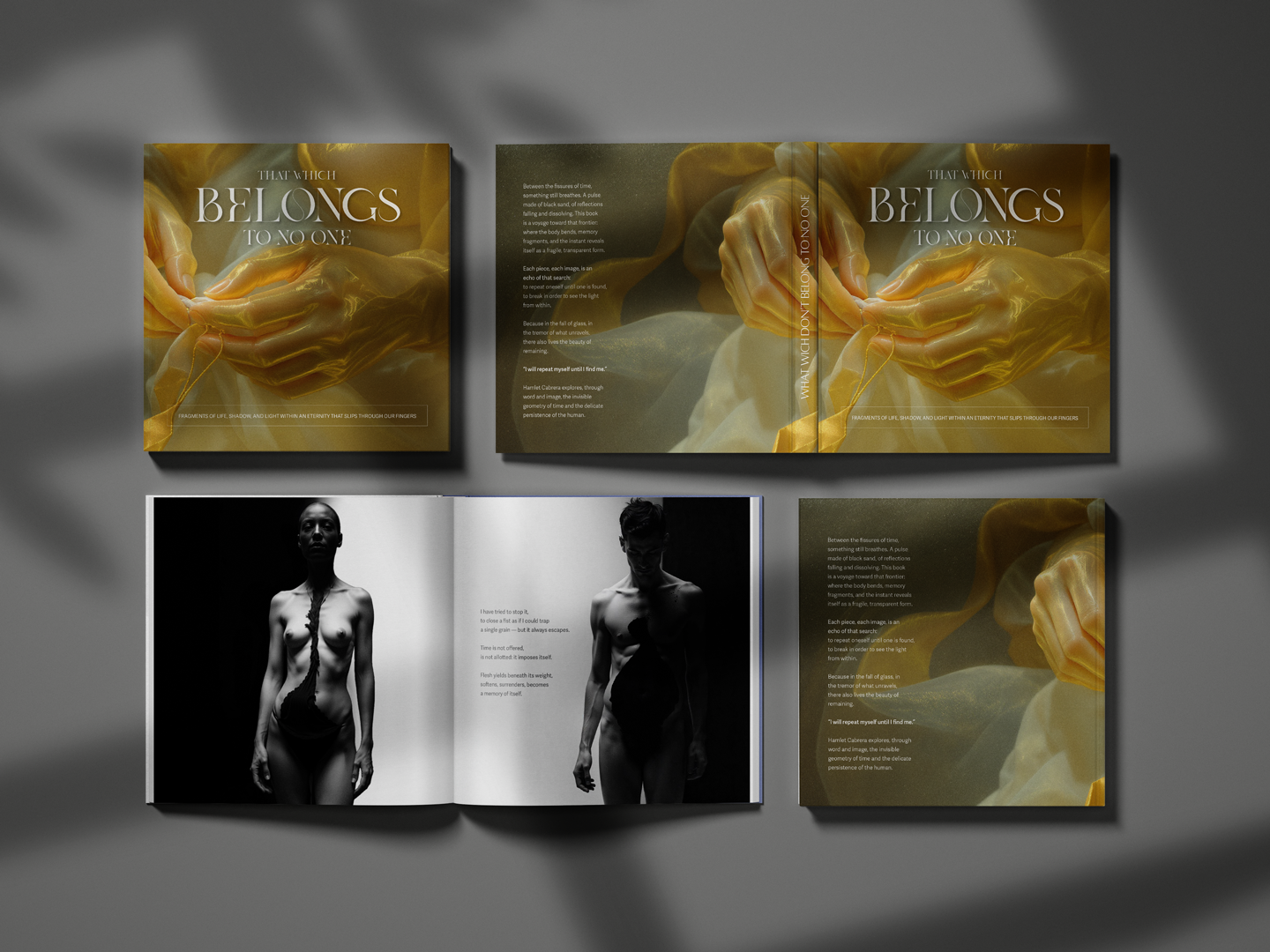
LIBRO: WHAT WHICH BELONGS TO NO ONE
Release: December 2025
What Which Belongs to No One is a book-length exploration of memory, place, and the emotional architectures we build inside ourselves. Part memoir, part essay, part visual documentation — it's a meditation on what we carry that has no owner, no fixed location, no official record.
The project asks: What stories are too fragile to tell? What memories need a container? What invisible worlds do we build inside ourselves when the external world offers no space for them?
What it is: A hybrid text combining written narratives, cyanotype photographs, and documentary images. The book is structured as a series of thresholds — moments of crossing, transformation, and emergence.
Why it matters: In a culture that privileges narrative clarity and linear progress, this work honors the fragmented, non-linear nature of actual memory and actual experience. It suggests that not everything needs to be owned, explained, or resolved.
The philosophical foundation: What belongs to no one is often the most precious — unclaimed memory, unprocessed emotion, untold stories. This book tries to hold those things with tenderness.
Core concept: Some stories don't need owners. Some memories need witnesses. Some truths resist the demand for clarity.
CILABS (CREATIVE IDENTITY LABS)
Launch: May 2025
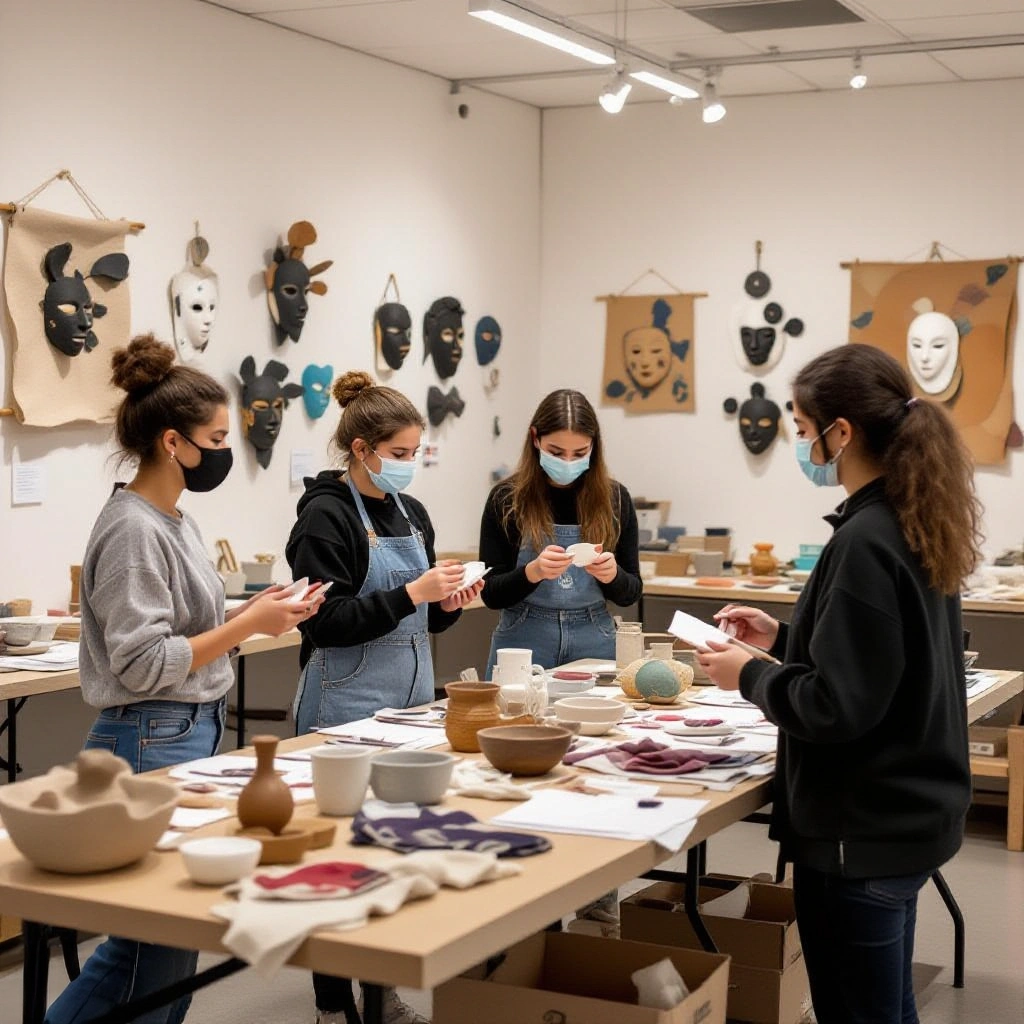
Creative Identity Labs (CILABS) launches as a comprehensive educational program designed to heal identity, restore voice, and transform how young people see themselves in relation to their culture, their creativity, and their community.
Based on research in neuroaesthetics, trauma-informed pedagogy, and cultural preservation, CILABS delivers three core workshops:
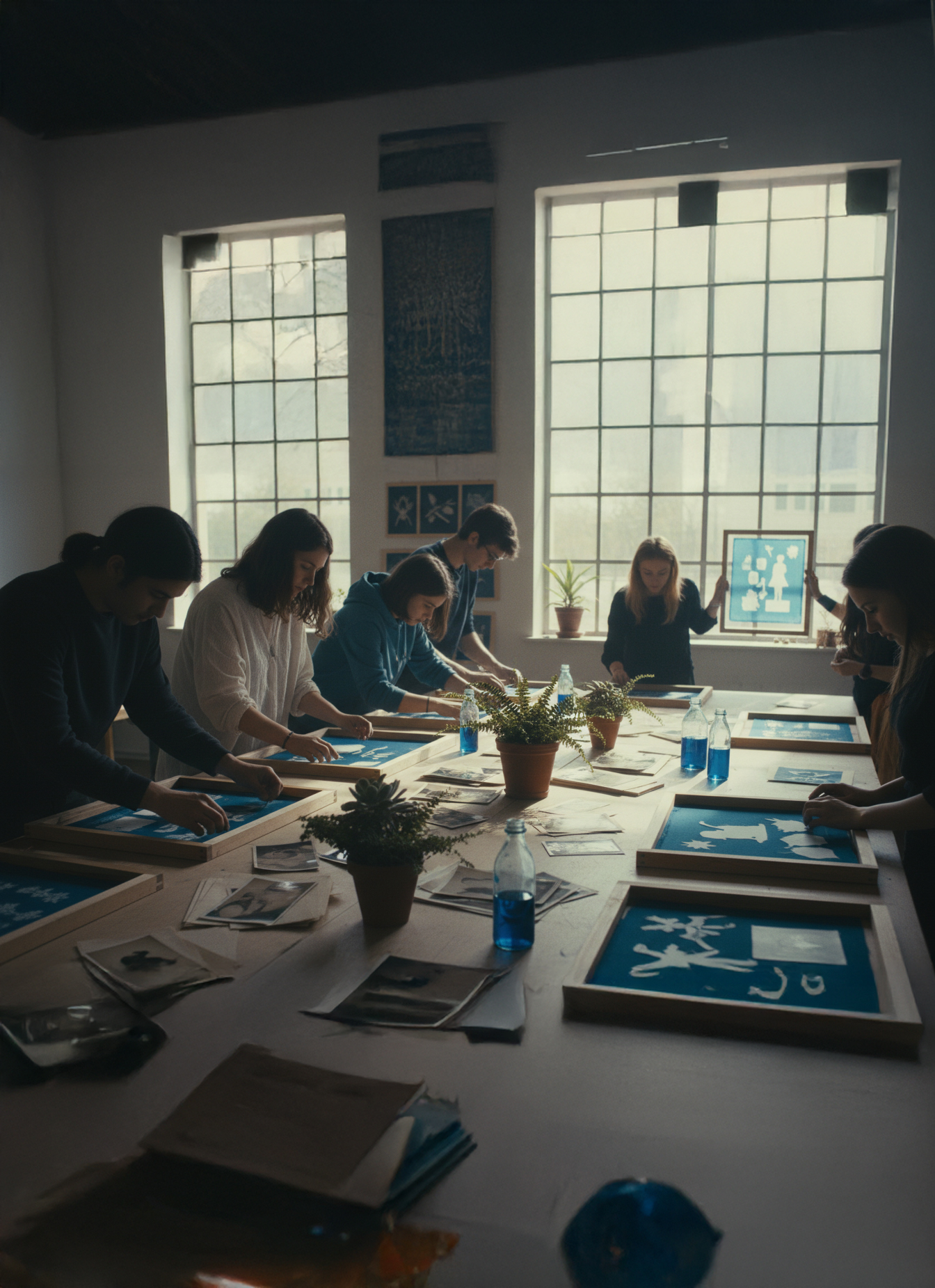
I AM FROM HERE (Cyanotype Identity Workshop) Using light-activated printing and memory excavation, young people create visual artworks that honor their cultural roots and reclaim their sense of belonging. Identity becomes visible.
MASKS OF AUTHENTICITY (Art & Emotional Literacy) Students design two-layered masks exploring what they show the world and what they protect. The workshop culminates in a ceremonial reveal where young people experience what it feels like to be truly seen.
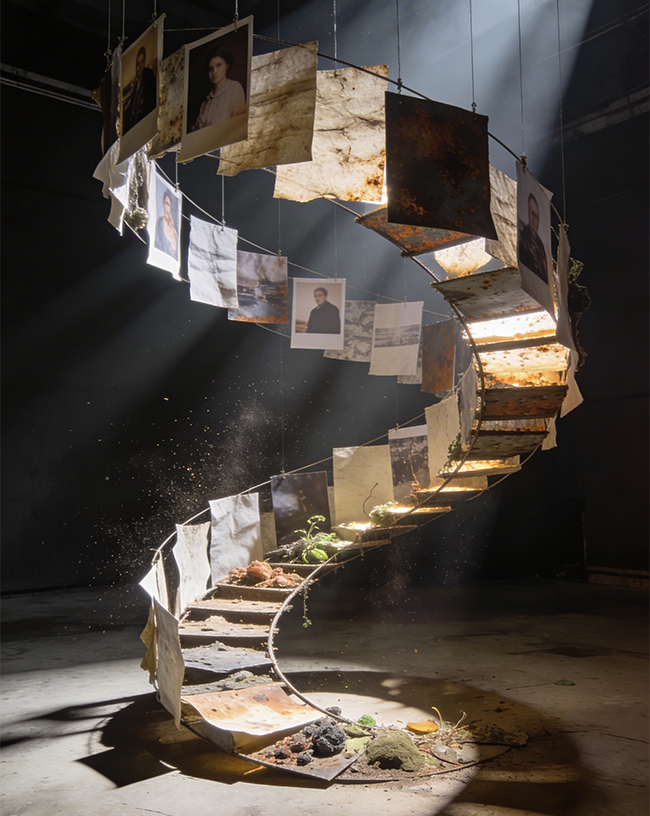
INVISIBLE MUSEUM (Memory Preservation) Young people create symbolic "museum artifacts" that preserve stories, memories, and emotions they carry privately. The artifacts are displayed in a gallery-like space, making the invisible visible and honored.
Why it matters: Young people today are drowning in information but starving for meaning. They have unlimited platforms for self-expression but no safe spaces for self-discovery. CILABS creates that space — not just to make art, but to heal, to belong, and to understand that who you are matters.
The neuroscience: Each workshop is designed to activate neurological systems that support identity development, emotional regulation, and sense of belonging. Art is medicine. Creativity is citizenship.
Core concept: Your story matters. Your voice matters. Your difference is your strength.
LIVING DARKROOM STUDIES
Research Period: July 2024 – Ongoing
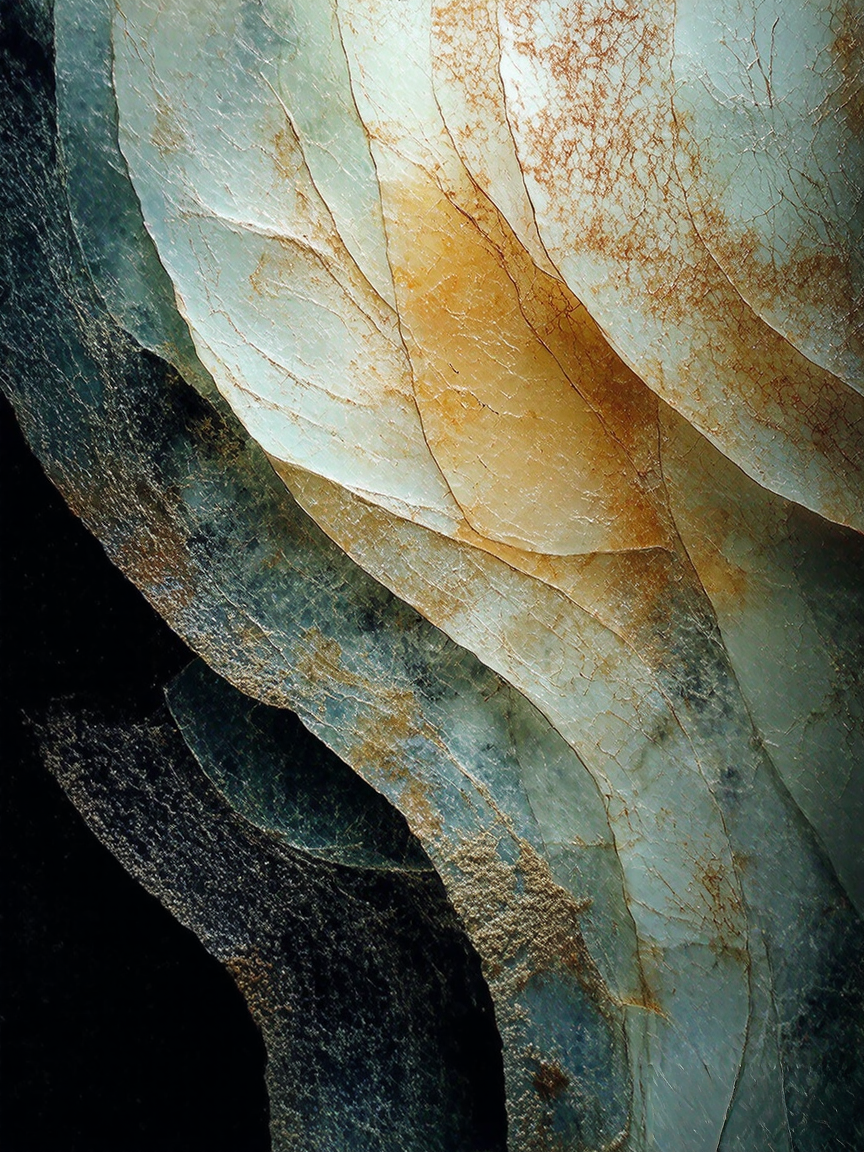
The living darkroom is exactly what it sounds like: a darkroom that lives. An investigation into how biological organisms can become photographic surfaces, printing mechanisms, and teaching materials.
This research explores bacteria (specifically kombucha SCOBY — symbiotic culture of bacteria and yeast), fungi, and organic materials as active collaborators in the photographic process.
What happens:
- Kombucha SCOBY becomes a translucent printing surface for cyanotype
- Light exposure through bacterial cellulose creates unique patterns
- Paper made from mycelium becomes both substrate and artwork
- Organic processes (growth, decay, aging) replace mechanical control
The experiments:
- Exposure times, lighting angles, and material combinations vary each time
- Failure is documented as carefully as success
- Each print is unrepeatable — a direct collaboration with living systems
- The "mistakes" often become the most interesting results
Why it matters: This research challenges the idea that control and precision are prerequisites for meaning-making. Instead, it suggests that collaboration with living systems teaches us something about creativity, humility, and what emerges when we stop demanding predictability.
Materiality:
- Bacterial cellulose (grown, not manufactured)
- Mycelium leather (fungal networks)
- Organic paper (botanical fibers)
- Light-sensitive chemistry (iron salts, cyanotype)
- Time (measured in days, weeks, seasons — not seconds)
Core concept: Design is not about control. It's about collaboration with living systems, with time, with error.
NEUROFLORA: SYMBIOSIS INVESTIGATIONS
Research Launch: November 2024
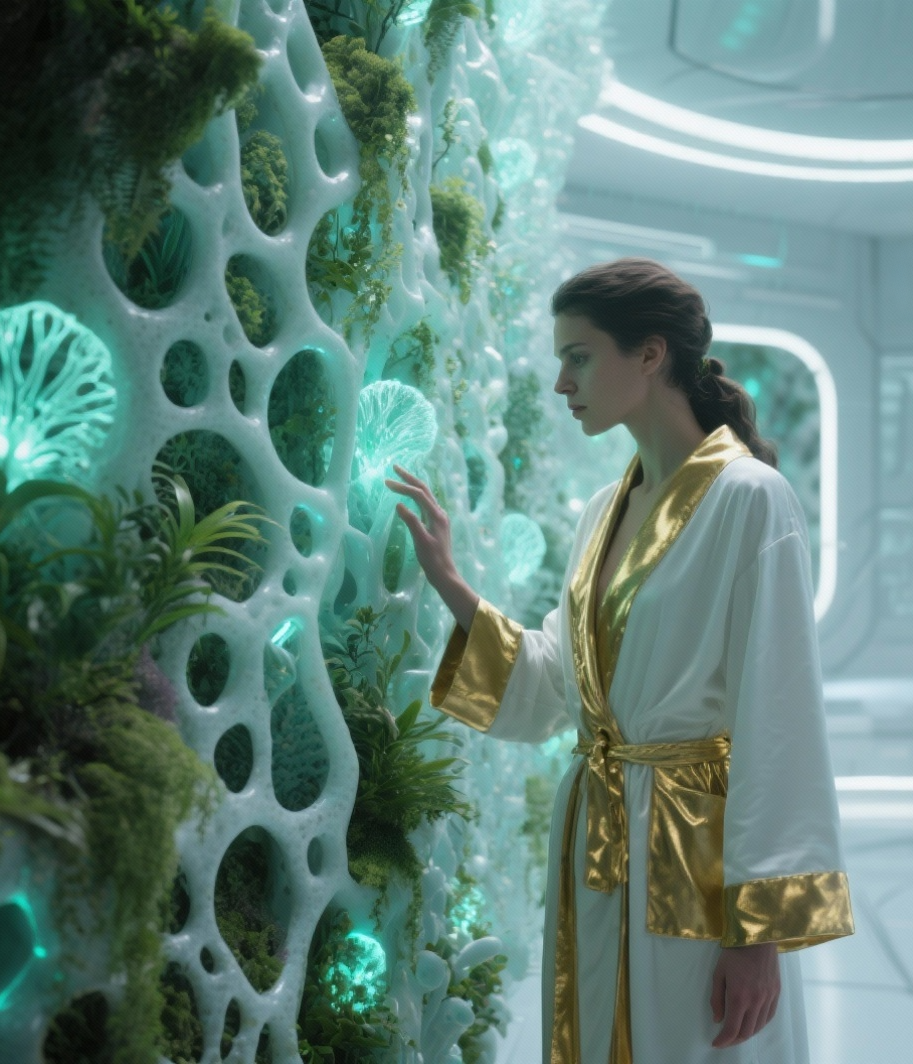
Neuroflora is a long-form research project investigating the symbiosis between neurological systems, botanical processes, and sensory experience. The central question: How can we design spaces and experiences that mirror natural symbiotic relationships and, in doing so, heal human nervous systems?
What we're investigating:
- Biophilic design informed by neuroscience
- How botanical presence literally changes brain activity
- Mycorrhizal networks as metaphors for neural networks
- Symbiosis as both biological and relational principle
- Spaces designed for nervous system regulation
The framework: Neuroflora treats the human-nature relationship not as separation but as symbiosis. Just as mycorrhizal networks connect forest ecosystems, human beings are designed for connection — to nature, to each other, to sensory experience.
Practical applications:
- Spatial design that reduces stress and increases focus
- Environmental design that supports emotional regulation
- Sensory experiences that activate parasympathetic nervous system
- Art installations that create felt sense of belonging
Research methods:
- Literature review (neuroscience, botany, design)
- Speculative design experiments
- Neuroimaging research (where available)
- Installation testing and feedback
- Collaboration with biologists and neuroscientists
Why it matters: We are living in a moment of unprecedented disconnection and dysregulation. Young people especially are experiencing anxiety, depression, and a profound sense of alienation. Neuroflora suggests that design — informed by neuroscience and nature — can be a tool for healing.
Core concept: We are not separate from nature. We are symbiotic with it. Design that honors this truth heals.
CYANOTYPE & ALTERNATIVE PHOTOGRAPHIC METHODS
Research Initiation: February 2023
This marks the formal beginning of working with cyanotype — a 19th-century photographic process that uses light-sensitive iron salts to create permanent images. What started as a curiosity about "old" technologies became a comprehensive investigation into what happens when you slow down, work with natural light, and embrace unpredictability.
The methods explored:
- Cyanotype printing (iron salts, sunlight, time)
- Alternative contact printing (light, objects, paper)
- Botanical contact printing (plants as photographic elements)
- Oxidation and aging (what happens over time)
- Variations in exposure, chemistry, and substrates
- Hybrid processes (cyanotype + other techniques)
Why cyanotype? Because it's slow. Because it's collaborative with light and weather. Because failure is beautiful and irreplaceable. Because each print is unique and unrepeatable. Because it activates memory and meaning-making in ways digital processes cannot.
The key discoveries:
- Light doesn't just record — it develops, like consciousness
- Chemistry is patient. Results emerge in their own time
- Sunlight is unreliable. That unreliability is the point
- Paper substrates matter. Material has agency
- Imperfection is signature, not flaw
- Process is the content
Documentation: Every experiment was photographed, timed, recorded. Exposure times, weather conditions, chemical formulas, results — all archived. This radical transparency is part of the practice.
Why it matters: In a world of instant digital capture, cyanotype asks: What becomes available when you slow down? What do we learn from processes we can't control? What truths emerge when we stop demanding perfection?
The invitation: This research is ongoing. Each season brings new light. Each experiment teaches. Each print is a small meditation on time, light, and the miracle that anything becomes visible at all.
Core concept: Light develops memory. Light develops perception. Light develops everything.
The Pulse Beneath
the Work
These six moments don't represent a linear progression. Instead, they mark significant turns in a practice that has always been about the same core questions:
- What is visible and invisible?
- How does time shape form and meaning?
- What can we learn from processes we don't control?
- How does creativity heal?
- What does identity actually mean?
Each project spirals back to these questions, moving deeper, working with different materials and communities, but always returning to the same core: The belief that design, photography, and art are not luxuries, but essential practices of meaning-making, healing, and human development.
A PRACTICE IN MOTION
This timeline documents not a career arc but a research arc. Each moment builds on the previous — cyanotype informs CILABS photography, CILABS pedagogy informs the books, neuroflora research informs all the visual work, and living darkroom experiments challenge every assumption about control and intention. The practice is alive. It changes. It fails and succeeds in equal measure. And each iteration, each experiment, each project, each event, teaches something irreplaceable.
What's next? That's always the question. The timeline continues.
A practice is not a destination. It's a direction.
It's not a finished thing. It's a living thing.
And the best projects are always the ones that make you ask better questions.